
Research at the Howarth Lab
Our research is focused on the design, synthesis, and characterization of metal–organic frameworks (MOFs). MOFs are porous materials comprised of metal nodes bridged by organic linkers. As inorganic materials chemists, we tune the size, shape, and chemical composition of the pores in MOFs for various applications.

Fundamental Research
Design and Synthesis of Rare-Earth Metal–Organic Frameworks
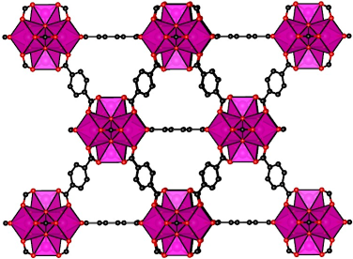
RE-UiO-66
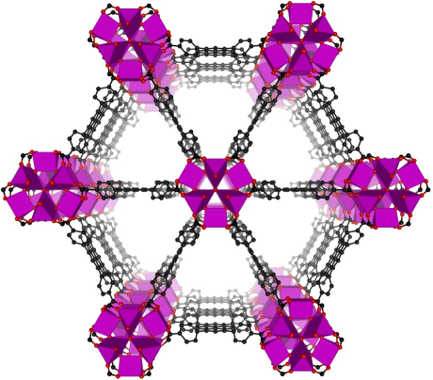
RE-CU-10
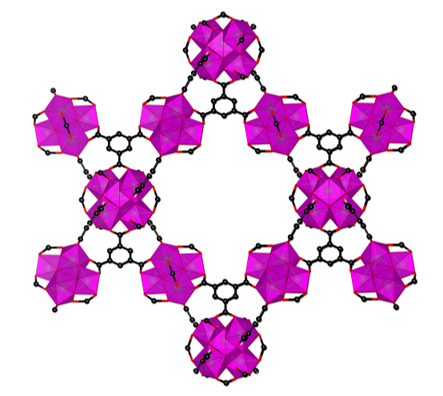
RE-CU-45
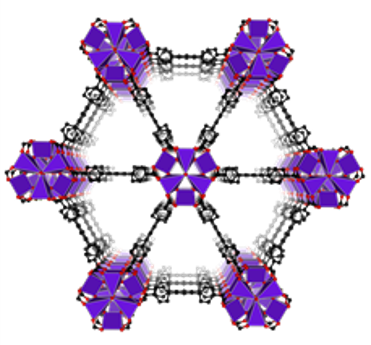
Tb-CU-27
We are particularly interested in the discovery of new rare-earth cluster-based MOFs. These are MOFs comprised of rare-earth elements including Sc, Y and the series of 15 lanthanoids, and where the metal node is a multinuclear metal cluster. This research includes:
- Understanding synthetic pathways for obtaining novel RE-MOFs
- Full structural and compositional characterization of novel RE-MOFs
- Studying the photophysical properties of novel RE-MOFs
- Working towards application of novel RE-MOFs in the detoxification of chemical warfare agents, sensing, and solid-state lighting
Applied Research
Zirconium-Based MOFs for Industrial Applications
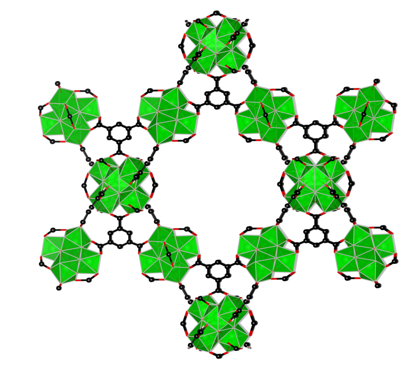
Zr-MOF-808
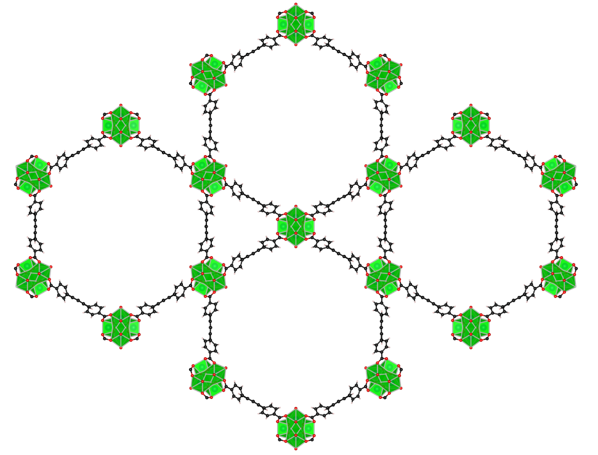
Zr-NU-1000
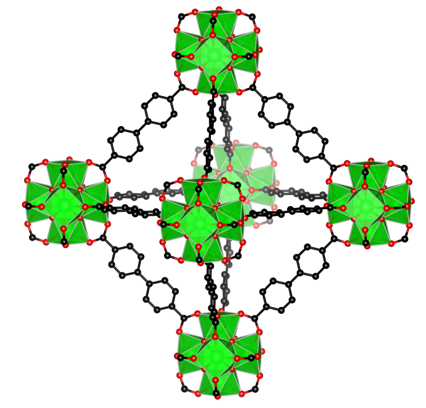
Zr-UiO-66
Several members of our team work closely with industrial partners on the development of MOF-based technologies. Most of this research is focused on Zr-based MOFs, although we work with other MOFs as well. This research includes applications in:
- Water treatment
- Carbon capture
- Downstream processing of commodity chemicals
- Critical element extraction and separation